Unknown's avatar

About peacelovepaleo

A mom of an autistic child trying to help other families adopt the Paleo diet and lifestyle

The Power of Paleo

Over the weekend, a friend of mine was reading through my blog on his iPad. I was nervous and fidgety, as I am when anyone is reading my writing. I recognize that my writing is personal and thoughtful, and I also knew that this touchy-feely success stuff is really not his style. I was setting myself up for some harsh criticism, or worse, to be the butt of an ongoing joke in our circle of friends. Nevertheless, I took a risk and held my breath. After many long moments, he finally laughed and nodded.

“I like that you have a plan and stick to it. You’re focused and you’re not going to let anything stop you.” He was of course referring to the lazer-like focus we have with adopting the Paleo diet and how it has become an obvious lifestyle choice for us. He read the Come Hell or High Water message loud and clear.

His comment stuck with me as I circled my way through my favorite Paleo blogs this week. I looked at all of the information, questions, and success stories through a new lens and really noticed themes of support, committment, and dedication to this way of life. Each story is so familiar to ours–loss, hopelessness, and despair giving way to progress, success, and hope. Inspiring stories of the fearless and focused overcoming Diabetes, PCOS, depression, anxiety, and weight-loss.

I identified with the many individuals who experienced secondary growth in harder-to-measure but easier-to-see achievements–emerging confidence, strength, and a sense of purpose that may have never surfaced due to the bullies on the playground, flawed Conventional Wisdom and profit-seeking Big Pharma.

It’s easy to see why so many of us feel this success. The leaders of this ancestral health movement empower their armies with information and answers that were there all along but are now are so easy to see. Science that stay-at-home moms like me can understand. Messages that denounce Complacency, but Encourage your best effort. Responsibility and Accountability with Consistency and Respect.

Each of us Paleo soldiers are leaning to read the messages of our bodies like a road map to better health. We reach our personal measures of success and become so empowered that when we find the strength and courage to share our stories with the world, we know that we will be welcomed with open arms into this powerful community.

While the Paleo diet has given Charlotte her health and future, the Paleo community has given me the confidence to help others. So I will say it loud and proud, without getting fidgety and apprehensive, and I believe that our story will be accepted and respected by even the toughest of critics.

The wonders of coconut

If you are new to the Paleo world, then the word coconut may bring to mind the synthetic, overly-sweetened junk found in suntan lotion or a cheap pina colada, and if that’s the case, my hope is that this post will educate you about the wonders of this delicious and super nutritious food. Our family reaps the benefits of coconut products so often, that I think it is worthy of an entire post.

The coconut is a versatile nut that contains many uses and benefits. You may have noticed the rise in popularity of coconut water. It’s also been called “nature’s Gatorade”. With naturally occurring electrolytes that our bodies need to recover from exercise or any strenuous work, it also contains salt, potassium, and magnesium.

I pick up my favorite brand at my local grocery store and use it as an afternoon refreshment on a warm day. Sometimes I add it to my water bottle and sip it after a workout (or just an otherwise exhausting day) for a boost of energy and hydration.

When we first began using coconut oil for cooking, I knew that there were significant health benefits, particularly for digestion and stomach issues. Since we believe digestive issues were the main cause of Charlotte’s delays, we were eager to use a product that might help heal her stomach.

Based on our success with it, I have known for a while that I wanted to share information about coconut products on this blog. I found a podcast on Underground Wellness with Dr. Bruce Fife, author of the book, Coconut Oil Miracle. I listened to the podcast and took notes as to learn more about coconut products and share with you how coconut oil has been beneficial in healing Charlotte’s gut and brain issues.

Here’s what I learned from Dr. Fife on the podcast, as it relates to overall health:

*Coconut oil is a healthy Saturated Fat that is heat stable. This means you can cook with it at high heat, and it will not go rancid and create free radicals in the body, which promote premature aging.

*Coconut oil stimulates the thyroid, regulating metabolism and increasing overall energy.

*Coconut oil has been known for its healing power. Being a MCFA (medium chain fatty acid), it has anti microbial properties, meaning that it helps break the lipid coat of bacteria and viruses and allows the body’s white blood cells to work more effectively.

*Coconut oil promotes healthy gut flora by allowing the friendly bacteria to flourish in the gut and killing any microorganisms or parasites that are not beneficial to the gut lining. It also kills candida (yeast overgrowth) in the digestive tract.

*Of particular interest to me was information about the benefits of coconut oil and Alzheimer’s. Dr. Fife mentioned that coconut oil provides ketone bodies which promote healing in the brain, and that many Alzheimer’s patients have had a regression in their symptoms after using coconut oil. Any kind of brain healing sounds good to me.

*Many more unbelievable health benefits are listed on Dr. Fife’s website.

What do you do with coconut oil?

Dr. Fife recommends drinking 1 to 3 tablespoons a day of melted coconut oil for an energy boost, but if you want a slower start, you can substitute coconut oil for any cooking oil like canola, corn, or vegetable oil.  We make a lot of skillet meals where we saute endless combinations of meat and veggies in coconut oil. In addition, some of our favorite recipes using coconut oil include Better Butter Chicken, plantain chips, or even sweet potatoes sliced like fries and cooked in coconut oil. (Make sure you wear old clothing or an apron when cooking with coconut oil since stains are difficult to get out of clothing)
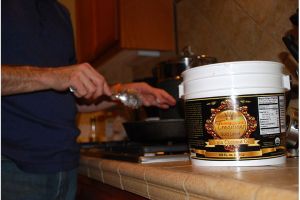
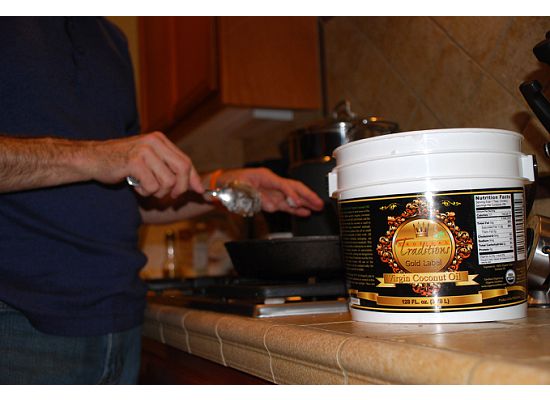
Our favorite brand of coconut oil is the Extra Virgin Gold from Label Tropical Traditions (above). It smells and tastes delicious. We buy the gallon size and use several times per day, and it lasts about 4 months.

I also keep a store-bought brand (above) around the house in case I run out. While it doesn’t taste or smell quite as spectacular, it’s a good substitute.

Are there benefits to coconut milk?

Coconut milk is the meat of the coconut crushed with added water and strained through a cheesecloth. You’ll find it in its least processed canned form in the Asian or Thai section of the grocery store. It serves as a base for many Paleo sauces and soups.

This is not to be confused with carton coconut milk easily accessible at most grocery stores. With coconut milk as the base, many stabilizers and sweetners are added, increasing the drinkability but reducing the health benefits.

What about coconut flour?

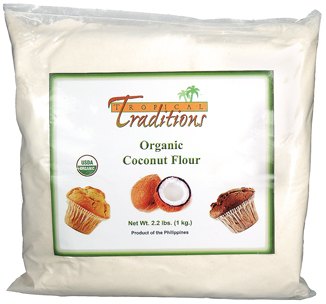
If you do any gluten-free baking, you may notice that coconut flour is often substituted for gluten laden flours. Coconut flour is the product of the dried and ground meat of the coconut. With lots of fiber and no phytic acid, the flour is ideal for Paleo baking. Our hands-down favorite dessert for birthdays or other special occasions is the coconut cake with coconut cream cheese frosting in Bill & Hayley’s book.

Check out any of the Paleo recipe sites in Paleo Community for many more ideas of how to make these wonderful products a staple in your kitchen.

Coconut oil & the skin

Dr. Fife mentioned in the podcast what we already know to be true. Coconut oil is great for the skin. My skin tends to be very dry, and I recently substituted my expensive face moisturizer for coconut oil with success. I immediately noticed less inflammation and puffiness due the detoxifying and healing quality of the oil. For severe winter dryness, I recently switched to this product from Tropical Traditions.

Clearly, we have bought into the health benefits of this food. In addition to cutting out grains, we feel that incorporating coconut products into our diet has been key to improving our overall health. If you are thinking about making a change to the Paleo lifestyle, picking up a coconut product in replacement for one of your other products may be a manageable first step.

For more reading on how adding healthy fats to our diet has helped Charlotte’s brain and stomach development, see this post.

Dana

I was teaching third grade in the Spring of 2004 when I learned I was pregnant for the first time. I had a few years of teaching under my belt, and I had learned a lot about kids without ever having any of my own. In all honesty, I thought I was pretty prepared to be a parent. I had a good grip on discipline, motivation, and overall management. I had also recognized the importance of supporting education at home and how it made all the difference in finding succees in the classroom.

As my belly grew, I spent lots of time studying the faces and behaviors of the students looking back at me. I wondered often what the child inside me would be like in one of those small yellow chairs. What would she look like? How well would she listen? Would she be helpful or shy? Visual or kinestethic learner? Friendly or needy? I have always aimed for some level of perfection, so I secretly prayed for a daughter who would be good at all of it….an academic whip without boredom, a social leader without being bossy, helpful and kind while still knowing her place.

It was my heart’s desire that she would be all of the things that I only had the potential to be. Depsite my silent expectations, I knew she would be loved unconditionally, and I vowed that all of the things that stood in the way of my childhood success, in and out of the classroom, would never be known to her.

Someone was listening. God gave Chad and I the most beautiful, bright, academic, social, and sweet child that anyone could ask for. She hit all of her milestones early and learned her letters and numbers before she could talk. She learned concepts with incredible ease and I soaked up every moment….teaching her vocabulary words and phrases way above her age level. Using foam letters in the bathtub, at the age of three, I taught her to rhyme and eventually read. I couldn’t help it…the teacher in me thrived on her ability to learn…the parent in me beamed….and the inner child in me was reborn.

On Father’s Day 2007, we found out that Dana would be a big sister. With all of the same preparation and secret wishes, I birthed another girl. I wondered how I could be so blessed with two daughters, just like my sister and I….so many opportunities to make their lives all that ours were and so much more.

And then things unfolded so differently than I could have ever imagined…Charlotte stole so much of my time from Dana in those early years. I was angry at my powerlessness to continue to give Dana what she needed to be all that she could. With shame and guilt, I shared these feelings with Chad, and we pulled together to make a great team in those difficult times. We did the best we could with the challenges we were handed, but all the while, I wondered how badly I was breaking her.

Anxiety, guilt, and resentment became rocks in my backpack. My dreams were crushed when Charlotte’s misbehavior spilled into our lives. The timeouts that worked brilliantly with Dana turned into screaming, endless, exhausting tantrums. I helplessly watched sensory seeking behavior and our ineffective discipline take over any outing or activity. The family I had dreamed of was within reach but still seemed so far away. What had happened? Where did the happiness and pride go? What had we done wrong?

Just when we thought it couldn’t get any worse…somehow learning made the difference. Slowly at first and then with a depth of wisdom and knowledge I never could have experienced in any classroom, we learned who Charlotte was, instead of who she wasn’t, and by God’s grace, we taught Dana through words and actions how to be a sister to Charlotte. And just like she has always done, she learned and loved and beautifully bonded with her sister in a way that we could have never expected.

Charlotte’s needs opened our eyes to a whole new world that we were trying desparately to hide from. Beyond our fears and expectations was a beautiful valley of peace and acceptance.

Just this week Dana received a glowing report card showing all of the perfection I had originally dreamed of. While I read it I beamed with pride as a teacher and parent, and then I paused and said a silent prayer of gratitude for each daughter…thank you for the one I wanted, but thank you even more for the one that we all needed.

A Perfect Storm

A few weeks ago, I was having a conversation with one of Charlotte’s Occupational Therapists about her defiant behavior. I had been noticing a pattern that went something like this: change in her routine due to holiday/illness/schedule, inappropriate sensory seeking behavior, Chad and I jumping in to regulate sensory needs, defiant and uncooperative behavior that diminishes over time. The cycle wrecks havoc on my mental state as I feel relief and exhaustion from the tide of dysregulation just passed and restlessness at the thought of the next swell coming upon us.

As I was talking to her I felt like an old weathered sea captain regaling his tales, vividly describing each cycle as a storm more difficult to bear than the last….with a thoughtful and far-off expression I discuss The Dysregulation of ’11…when we moved from one house to another…….oh, yes, then there was the Starting School Dysregulation last August….that was a really bad one….many nights of bad sleep, impulsive behavior…..and then there was the one just a few months ago when her preschool teacher left….horribly defiant….

She smiles patiently while I carefully explain each harrowing experience after another, all the while, I’m searching for appropriate amounts of validation and sympathy. She finally nods and concludes that this is all “normal”. I really don’t like that word and stare at her as if that answer is completely unacceptable. She squares herself in her chair to look at me and says, “It’s a good thing. The nervous system is resetting itself in preparation for more growth.”

I’ve been carefully considering the therapists words over the last few weeks, as illness stole our family’s sense of routine and order, and we have begun a new and mild cycle of dysregulation. It’s mild in the sense that her sensory issues are more under control, but it has been difficult in the sense that pragmatic speech has been affected. We’re hearing more scripted language, seeing less eye contact, and generally feeling less connected to her. This certainly doesn’t sit well with me as we can’t get Speech Therapy to save our lives, and my anxiety switches begin turning ON as I’m feeling helpless and out of control.

I force myself to come out of the haze of worry and fear and begin to put my concerns into constructive questions. At the next meeting with the therapist, I find myself asking questions like, “now that she’s more sensory regulated, will her patterns of dysregulation look more social and speech related?” Again, she calmly nods Yes. We discuss options for how to regulate her when she seems socially disconnected.

A few days later I’m reading The Way I See It by Temple Grandin on my Kindle and this quote strikes me…

“the best thing a parent (of a newly diagnosed parent can do) can do is to watch their child without preconceived notions or judgments and learn how the child functions, acts, and reacts to his or her world.” (parentheses mine)

I suddenly realize that I can take these two pieces of information and put them together to calm myself and help Charlotte. With careful practice, I begin to observe without my veil of anxiety and worry. Instead of squirming around her nonsense questions and comments, I find her eyes with mine and tell her that she’s not making sense. I coach her into finding better words to explain what she’s thinking and reward her for her efforts. It helps, and she seems relieved that I find this connection with her. She’s excited to tell me more about Max and Ruby’s adventures or what she did at school. She wants to ask what we’re doing tomorrow and when is her birthday. I find my own connection with her and ultimately find my peace of mind.

I tell myself that in giving her the words and safety she needs to communicate, she will experience a new surge of growth. The cycle will complete itself, and the next one will bring new and different challenges. My anxiety continues to rest at bay but these thoughts allow me to breathe a little easier. I remind myself that it just takes time and patience.

I ease up from bracing myself for the impact of the storm and ride the waves as if I’m on the voyage of a lifetime.

My favorite things…

I was never a huge fan of Oprah, but I do remember that she had an episode every now and then where she shared her favorite material possessions with her viewers. I hate to sound like a Bitter Betty, but really? What is the point of this?  Except making extreme amounts of money for some company that manufactures T-shirt bed sheets and making the rest of us feel envious for her over-the-top lifestyle, it seems a little shallow and self-absorbed to me.

So, here I go with my list of favorite things, which are quite a bit different from Oprah’s. These really have become things that we couldn’t live without. Chances are you won’t be jealous of my lifestyle after reading these and hopefully you’ll actually find some valuable down-to-earth products that will help you make it through a difficult day.

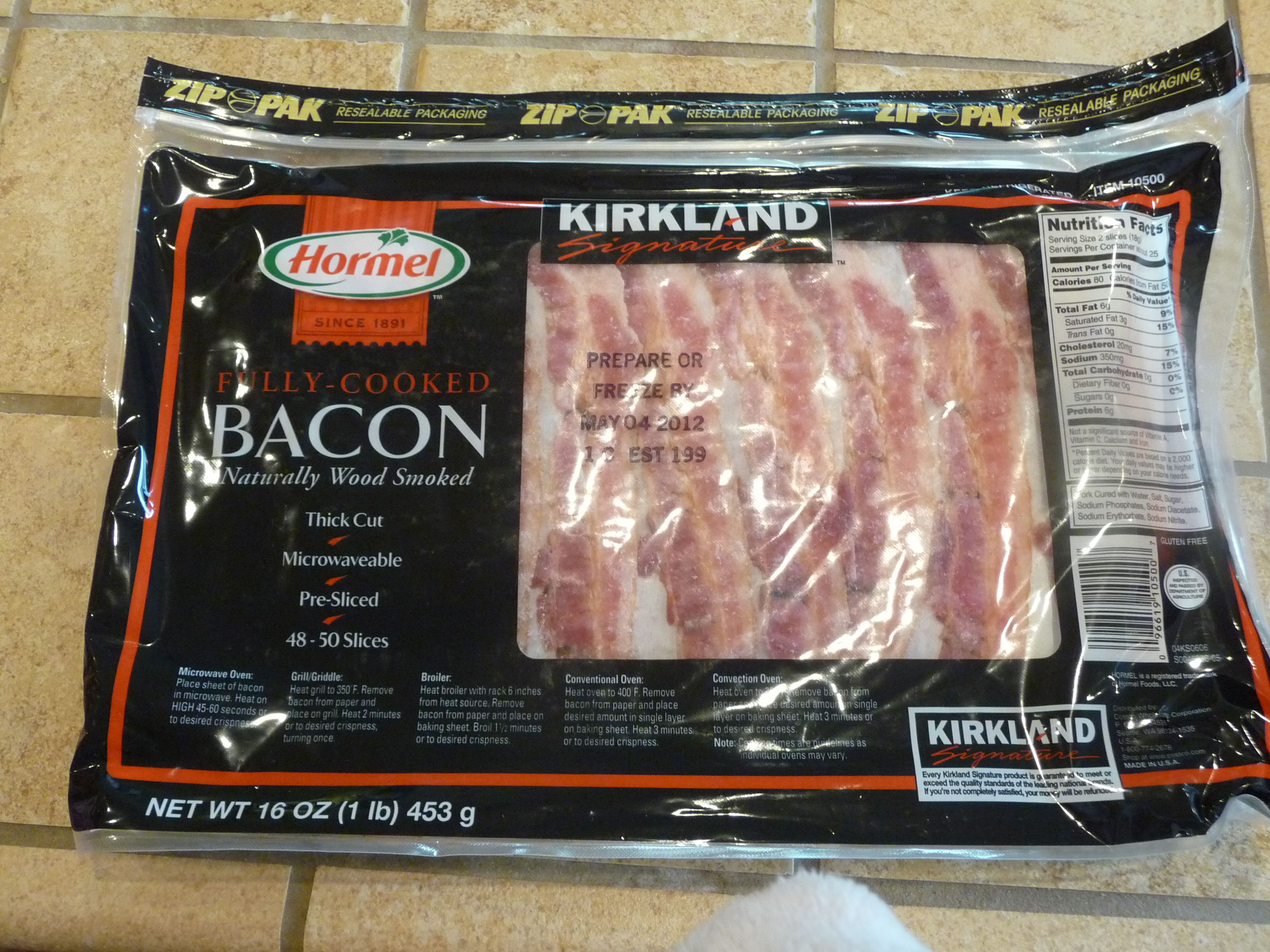
1. Microwavable bacon–okay, I know that hard-core Paleos may squirm at his staple in our household, but school day mornings are hectic and I am solo getting my kids dressed, fed, and out the door. I’ve written about how some mornings with a dysregulated 3-year-old can be disaster, so here’s to something easy and yummy. We get ours at Costco for about 12 bucks.

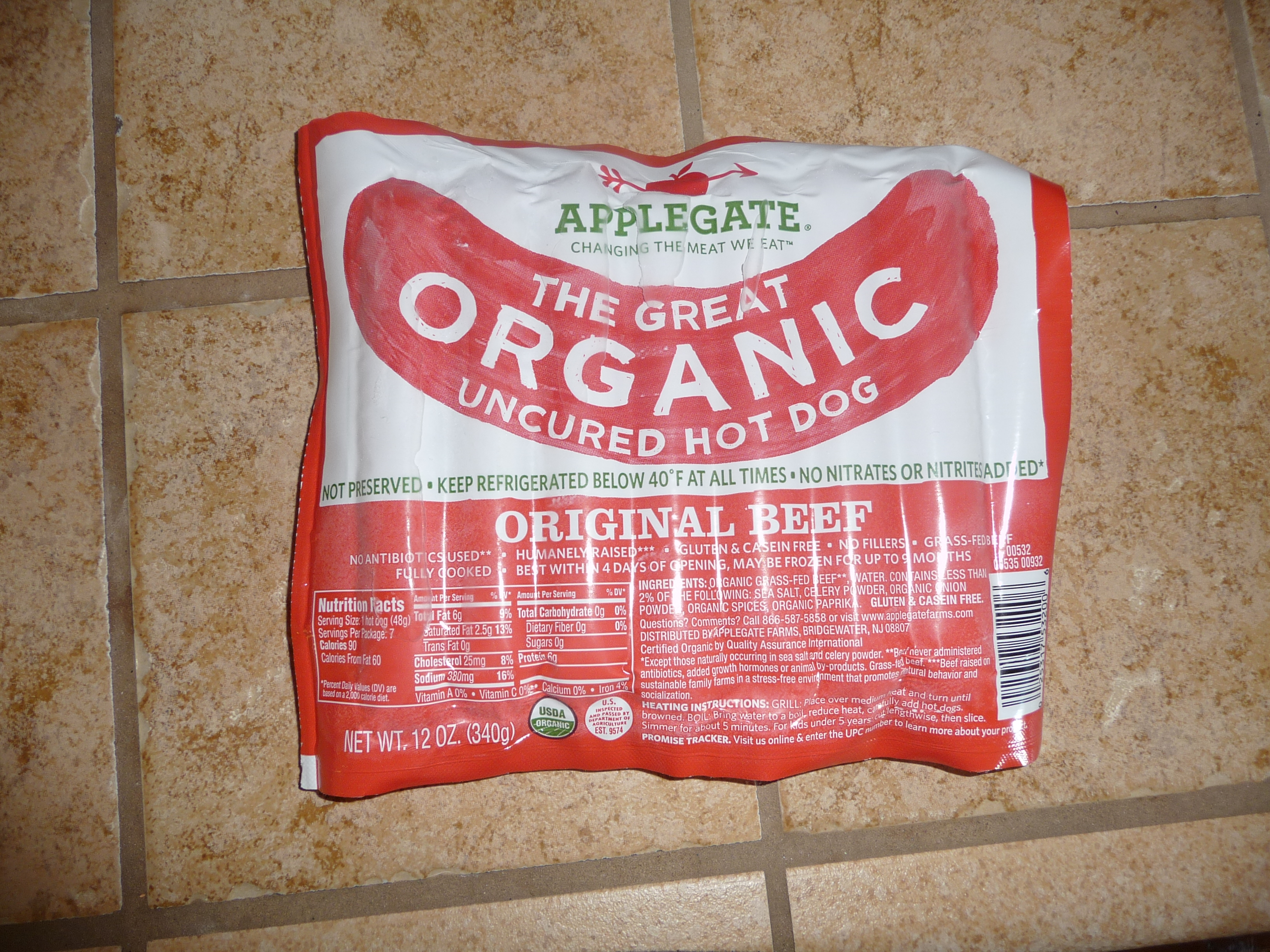
2. Applegate Farms Hot Dogs….since we’re talking about meat….Applegate Farms  grass-fed beef hot dogs are another quick and easy meal option. They’re not cheap (Trader Joe’s sells them for about $5/package and I’ve seen them at Whole Foods for $7-$8) but you pay for grass-fed meat without nitratres or preservatives.

3. Tropical Traditions Coconut Oil…hands-down one of the most valuable products we use. I firmly believe that coconut oil has healed Charlotte’s gut in a way that few other foods could. We buy the gallon size every 4-6 months and use this to cook everything from sweet potatoes to eggs to reheating leftovers. It also makes a great skin mositurizer and deodorant.

4. Trampoline–I recently asked Charlotte’s Occupational Therapist for one thing I could do to keep her regulated over the holidays. I was surprised to hear her say bounce-and-crash. We have always encouraged her to jump on the trampoline to gain proprioceptive input, but I recently added crash pillows for her to get the added compression sensation she is craving.

5. Benik Compression Vest–When Charlotte attended a center-based program last year, one of her teachers suggested a compression vest to help her sit still during circle time. It has become so useful and frequently-used over the past year, that I can easily tell when she needs it.

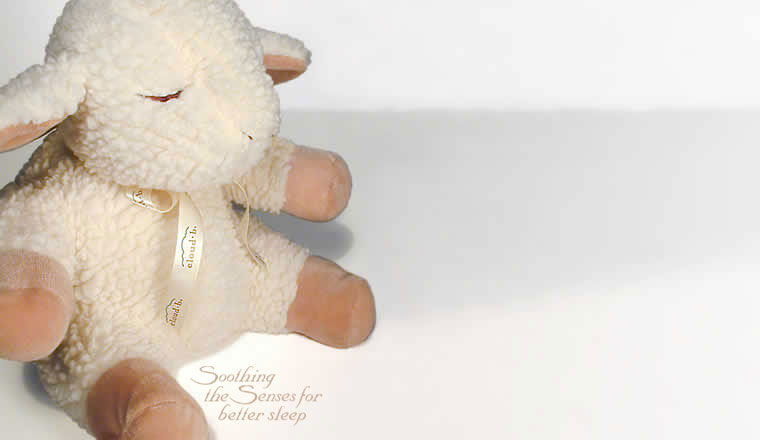
6. Sleep Sheep–My sister recently had her first baby, and I sound like a broken record when she calls to talk about the baby’s sleeping, “Do you have the sheep by her head? Is it turned up really loud?” We laugh about it now, but having soothing noise for babies or dysregulated sleepers of any age is priceless. We also use it at rest/naptime, setting the timer for 45 minutes, Charlotte knows she must rest in her room until the sheep turns off.

7. The vegetable box, as it’s affectionately referred to in our house, is our weekly CSA allotment. It often has fruit or non-vegetable items, but the all items are delicious and fresh, and it also keeps our meals unique and our fridge stocked with healthy fruits and veggies.

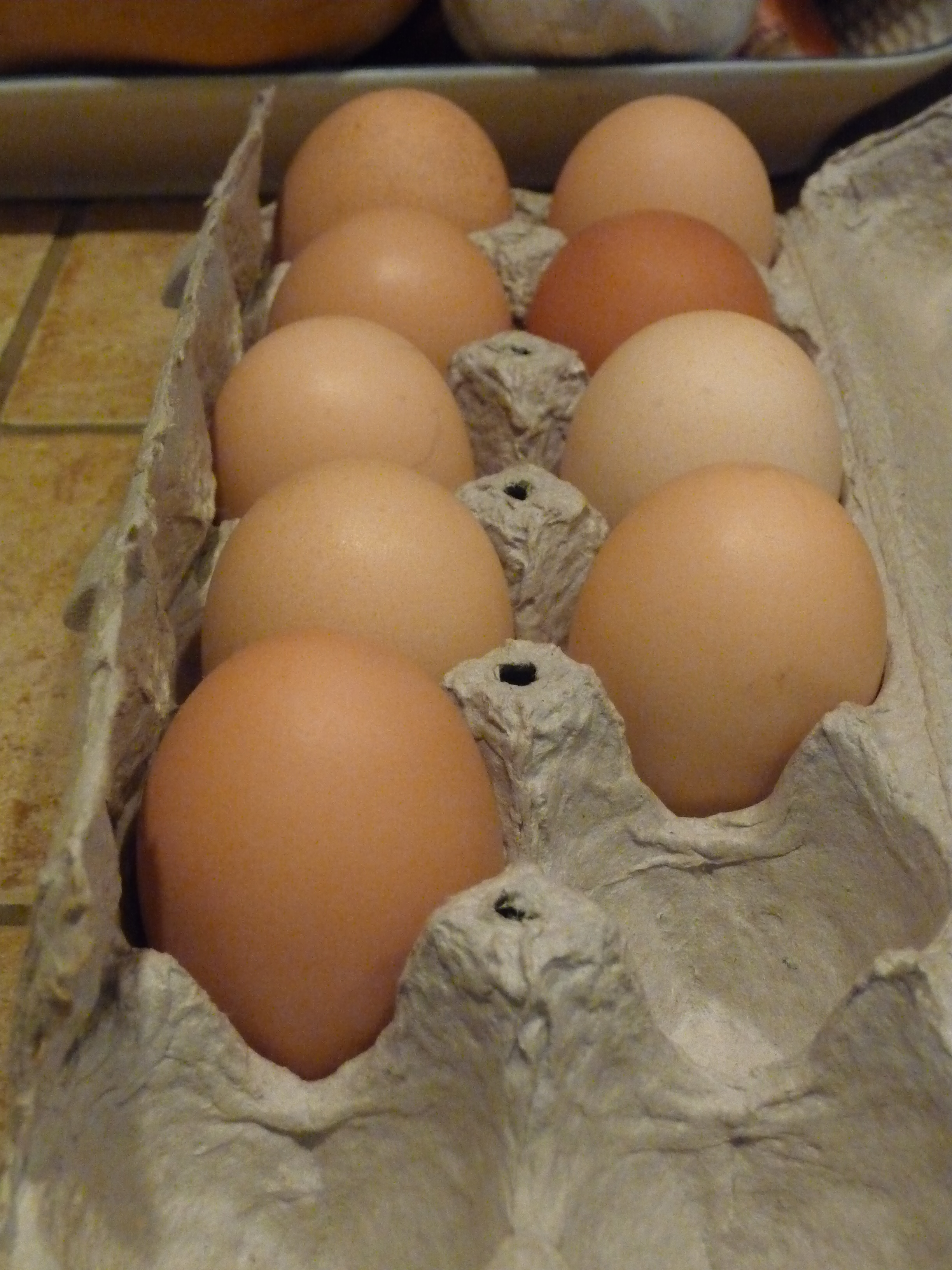
8. Eggs. A few months ago, I began to seek out fresh local eggs after the Costco Organic Free Range Eggs were looking pale in color and small. I was able to track some down from a friend who raises chickens. The color and size of real eggs is unbelievable, and I feel really good giving my kids such a visually nutrient-dense food.

9. My iPod–okay, so this one probably sounds materialistic and non-Paleo, but it wasn’t until I recently lost my iPod that I realized how much I loved mine and needed it. During Charlotte’s twice weekly therapy sessions, I take a brisk walk and listen to podcasts from my favorite Paleo people. They help keep me up to speed on my Paleo knowledge, in addition to making me laugh, and giving me motivation to keep on truckin’ on our Paleo journey. (Oh, and yes, I do get much teasing from my friends and family about what a nerd I am for using my ipod for Paleo podcasts versus listening to music like most people do)

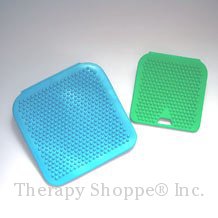
10. Seat cushions (sorry I couldn’t think of a fancier name) I recently ordered them from Therappy Shoppe, and I could do an entire blog post about how when kids are comfortable in their chair during meal time, they eat better! Mealtime is much more pleasant without the wiggling and finding any excuse to get up from their seats.

This worked especially well for Charlotte because she is considered a “sensory seeker” and needs to feel the seat under her to be comfortable.

Stayed tuned for more of my favorite things because as I wrote this, I thought of about 10 more things I could’ve added……hmmm….maybe I’m more materialistic than I thought.

Adrenal RUSH

A few nights ago, I was watching the television show Top Chef with my older daughter, Dana. We listened to the explanation of the first Quickfire Challenge, where the chefs are given a specific task and asked to complete a gourmet treat in a given amount of time. Since I wasn’t sure if she had seen the show before, I asked her If she knew what the chefs were supposed to do. I filled in the details for her and she nodded excitedly and added, “and they have to do it all in 30 minutes!”

She was correct, and the energy and excitement that she felt watching these chefs meet the challenge got me thinking about entertainment and adrenaline. I’ve noticed that since I’ve begun the Paleo lifestyle, I look at the environment my girls are living in with a much more critical eye. Feeding them foods that the government and media deemed healthy led to illness and neurological issues, and not to be a party-pooper, but I now I’m thinking that our seemingly harmless favorite TV shows about food and competition may not be good for them.

The adrenal response is very powerful and is triggered by our thoughts. As I’ve mentioned before, our mind sends out stress signals as if we were in fight or flight mode, and our adrenal glands respond with the hormones cortisol and adrenaline. It’s for our own survival. In Paleo days, fighting our wild prey for dinner would warrant an adrenal response to keep us alive and help us fun fast, jump higher, or do whatever we needed to do to stay alive.

The addictive part of the adrenaline rush is that you don’t feel anything else when you are feeling adrenaline. Professional athletes don’t feel the pain of their injuries until days later because adrenaline doesn’t allow it in the midst of a big game. We are tricking the body to think it’s a life or death situation. Can that be good for us?

Television producers seem to think so. More and more television shows like Top Chef, 24, and Survivor want us to feel the adrenaline that the characters feel while they are preparing food or participating in a challenge. It works. We put our thoughts and worries on hold while we “enjoy” these shows.

The short term problem is that even small amounts of adrenaline that we feel from watching television can be felt in our bodies. In prioritizing mode, our bodies know that properly digesting our dinner, preparing melatonin for sleep, or regulating seratonin for a balanced mood are secondary to staying alive. In the long term, a chronic release of adrenaline leads to a breakdown of the adrenal glands.

Four years after my adrenal glands failed, I am still trying to retrain my thoughts to prevent a stress response. I stay away from watching certain shows late at night and often put a blanket or pillow in front of my face to prevent a surge of adrenaline that would interrupt my sleep. It seems to make much more sense to stop watching these shows all together or even stop watching TV, but I’m not ready to go that far.

For now, I’ll watch these shows and sports competitions and try to enjoy them for the entertainment they are without getting too attached to the characters or outcome. I’ll remind Dana just like my parents reminded me when I was frightened during a movie, “It’s not real. It’s only TV.”

Small Victories

As Charlotte’s fourth birthday approaches, I have been reflecting on the starting point of our Paleo journey. It was the day that she turned 2 years old that her dysregulation and stress were unseen by us, but were carefully noticed and pointed out by caring friends. It was at a time when her immune system was so compromised that she was constantly and unsuccessfully battling illness. We began slowly eliminating grains and sugar and watched in astonishment as her health improved.

So, today, nearly 2 years later, I am proud to say that a week after Dana brought a nasty stomach virus into out home, Charlotte has been unfazed. Previous bouts of stomach flu tore through our house despite my best efforts to sanitize and prevent drink sharing. This time I thought about it less. I trusted out bodies to handle the virus, but I knew the strength of the enemy we were dealing with. Without emotion or guilt, I forced everyone to eat clean for 1 week. Sorry, no gluten-free oatmeal or pancakes. Only 1 corn tortilla with your taco. Your burger better be bun-less. Your stomach will thank me. I am relishing our triumph over a microscopic virus that would have beat us in the past.

The next victory is so sweet and tender it’s difficult to put into words…..it’s kind of like yoga when you’ve reached your edge and are experiencing the ecstasy of the stretch…..or it’s like an incredible and breathtaking view at the end of a strenuous hike….maybe it’s more like opening a present that contains a gift you’ve dreamed about, but never spoken of. Truthfully, it’s much more simple….it’s when she locks eyes with me, and I see clearly that the discomfort and pain of her frozen her smile and spirit are beginning to melt away. All that’s left is the beautiful and peaceful face that I remember so vividly on the day she was born.

In many ways I’m meeting her for the first time and experiencing the sweet fruits of preschool independence after all the harrowing and dysregulated years of her toddlerhood.

So I am soaking up these small victories like sweet fruits and using the intensely positive and powerful gift of a mommy’s love and pride to cleanse my own failures and setbacks.

Happy 2nd Paleo Anniversary to us.

As much as I would love to keep this post as is and continue to believe that Charlotte beat the stomach flu, it is sadly not so. The barf began just a few hours after I documented the false triumph…and eerily only about 20 minutes after Chad and I left for dinner with our sick child in the hands of an unsuspecting friend. But somehow, in the midst of the guilt and disbelief and sleep deprivation, I still feel the positive emotions of gratitude for my friend’s selflessness, pride in Dana’s helpful hand, and relief in knowing that despite this particular bout of the nasties, Charlotte is still a strong and healthy kid.

Stress Management for Moms (part 3–It’s All in Your Head)

So if you’ve read the first 2 installments of this series, you may think that I’ve got this all figured out and that I spend my days sipping Paleo-friendly lattes while my kids behave perfectly and my house cleans itself. Read on, my friend.

In the Fall of last year, I was feeling really good about all of the Actions I had taken to get everyone’s needs met. Charlotte was finally in therapy 2 days per week. Activities like swimming and ballet for both girls were in place, and I could still help in Dana’s classroom, walk, practice yoga, attend Pilates, and make a delicious Paleo meal every night. See where I’m going with this? Remember when I talked about slipping back into my old ways? (I’m a recovering type A mom who did everything right)

I was doing a good job, but I nearly stopped dead in my tracks while I was taking a walk and listening to one of my Paleo podcasts on my ipod. The words of wisdom came from naturopathic doctor Bryan P. Walsh. He was talking to Sean Croxton of Underground Wellness about Adrenal Fatigue. Dr. Walsh’s message was….it’s not your adrenal glands that are broken. It’s the messages you send to them that overwork them.

He went on to explain that the adrenal glands are like factories that send out stress hormones based on the thoughts that I produce. Lots of negative and anxious thoughts (I’m really good at making those) make cortisol and adrenaline, which are the enemies to the serotonin and melotonin I desperately need. You mean I am in control of my adrenal secretions? I stood stunned on the sidewalk for a moment and let this sink in.

I thought back to my schedule, my routine, and my tight grip on keeping everything just right. No wonder my recovery felt so slow and laborious. I was pushing a big rock up hill, and I was the one determining the size of the rock.

A few weeks later, as if the my-thoughts-to-God’s-ears-back-to-my-ears thing was somehow in place, I listened to my favorite Paleo nutritionists, Liz and Diane, talk about Adrenal Fatigue while I was doing a monster sink full of dishes. Diane referenced the Dr. Walsh podcast that I had listened to and talked extensively (to make sure I was listening) about stress management and adrenals.

Okay, so I took Action…again. I was at the bookstore just last week, and I picked up a this book on meditation from the clearance rack. I’m warning you now that this is going to get a little mindful and kooky, so bear with me. I recognize that in order to get my mind in a place where it doesn’t send negative thoughts to my adrenal glands, I need to get mindful of my thoughts and rid myself of the ones that I really don’t need. Consider it like the purging of the playroom…something you put off for ages because you really don’t want to do it, you eventually cave, in order to keep your sanity.

The Backpack

The book said that I would have clarity of thought and more creative energy if I followed the steps, and I thought it sounded a little too good to be true…until…..I had some beautiful imagery enter my mind that when I spoke it out loud, it sounded like someone else’s idea (and it might be, so don’t tell anybody if you read this somewhere else, too).

Here we go…I warned you….

Imagine that life is a journey and you are walking along a path with many other people. These are people you love and trust and want to help you life a better life. If you are spiritual or religious, your higher power is with you as well. Everyone on the journey is wearing a backpack, and everyone’s backpack is full of rocks. The rocks represent all of our issues, problems, and ultimately our negative or harmful thoughts. Just like real life, if you have a lot on your plate, your backpack feels very heavy. So heavy, that you may need to take a rock out and ask someone on your journey to help you carry it.

The carrying of the rocks may be a healthy exercise for you or others, or you may be carrying too many rocks that don’t belong to you. This was the old me…a backpack full of rocks and every limb, finger, and toe weighed down by rocks. The biggest and heaviest rock in my backpack was guilt. But, in my imagery, the new me walked with a backpack full of light things like Hope and Love and Faith. I was strong and powerful because I wasn’t weighed down by the issues of others, and I was good at carrying (managing) the rocks (problems) that did come into my backpack.

When I shared this imagery with Chad, he explained that there’s yet another skill that can be learned on our journey (I’m sure he loves my mindfulness). He explained that you can show others your rock, and they can look at it and tell you what you need to hear about it, but they don’t have to carry it. And if they do, you get to tell them how long and far you can manage it. I love his wisdom when it dovetails with mine.

Okay, back to reality. I love this imagery because it encompasses so many practices I learned in therapy…boundaries, letting go of guilt, and finding a voice.

Just this week, I’ve visualized heaving rocks out of my backpack like one of those massively strong Olympic shot-putter. In just a few days, I do feel lighter, less stressed, and I have found more energy to regulate myself and my kids.

So, next time, you are regulating yourself with exercise/reading/talking on the phone, don’t let guilt or any negative thoughts pull you back to the laundry, your kids’ homework, or a tantrum. Throw the guilt out of the backpack, tend to the problem, and be mindful of how much lighter you feel, knowing you are regulated.

Stress Management for Moms (part 2–Taking Action)

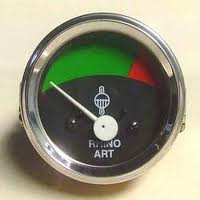
In part one of the series I talked about having an awareness of how our bodies deal with chronic stress and that life’s challenges can force us to check our temperature gauge to see if we need to make any adjustments.

The term regulation became a commonly used word in my family and circle of friends after the sensory related issues with Charlotte were uncovered. My husband and other adults friends of ours felt that we could relate to the dysregulation that we had all seen Charlotte experience. In our world, this looks like an inability to deal with her environment…tantrums, screaming, unable to complete tasks like going potty, getting dressed, following directions, etc. It takes sensory regulation in the form of therapy, sleep, diet, and routine to get her back on track.

We began to use the word liberally and have conversations about what we do as adults to keep ourselves regulated and comfortable in our own environment. Again, having an awareness of our own states of dysregulation and how we adjust leads us to how we ultimately manage our stress. How do you handle stress? What states of mind or activities help you feel your best, or regulated?

What do you know about yourself?

I know that I need to sleep at least 8 hours per night. This is no-brainer, right? It’s important to stop and rethink the importance of sleep. As moms, we push our DVR/to-do list into our children’s sleeping hours all the while pushing our adrenaline up and sleep patterns out of whack. I wouldn’t have survived my adrenal issues if I hadn’t made sleep a priority and let go of any expectations of staying awake past 10pm.

I know that I have the need to spend time away from my kids in order to regulate myself. After the birth of my first daughter, Dana, I struggled with mild PPD until I returned to work part-time. Making space in my brain for my own challenges, relationships, and goals is crucial to my mental health. Blogging anyone?

I know that I need to stay away from sugar, breads, and empty calories. I have always had a fast metabolism and low blood sugar issues. In order to feel comfortable and sleep well, I need to eat higher fat and protein foods that keep me full for longer. I heart bacon.

I know I need exercise but I also know that I get very tired when I exercise too hard. I need to exercise, and I love my routine of walking, yoga, and Pilates. When I recently tried to add a high-intensity hour-long cardio yoga, I was sore and exhausted even after several weeks of classes. Sadly, kicking ass in CrossFit will have to wait.

Are you really tired of being stressed out?..okay, then. Make. Some. Changes.

I’m going to use my teacher voice here with you, beause this is important. You deserve to feel happy/sane/calm/in-control. Find out who you are and what makes you feel good. Take action to regulate yourself.

(Don’t worry, you’re not turning this into anyone….unless you want to…if that’s the case and you’re a SAHM missing your old working-world days, pretend you are going to be asked about your stress level at your Year End Review.)

Here’s what my Taking Action looked like…

I realized that I felt better when I ate Paleo food, I slowly eliminated all of the foods that were making me feel less-than-great. It only takes a few weeks of eating clean food to realize the differences you are making. Lots more on that here, here, and here.

I scheduled my week to attend Pilates and Yoga classes when my kids are at school. I set up a 2-mile walking loop near the center where Charlotte takes therapy. I have learned to respect my body and it’s limits when it comes to exercise.

I communicate my needs (without whining) for having a girls’ night or date night with my husband. I also have a babysitter who watches my kids basically whenever I need her. My time away is crucial. It was important for me to recognize the feelings of anxiety I feel from being smothered by the needs of my kids or trapped in my own home. I let go of the guilt and do what I need to do to feel better. See one of my favorite blogs Momastery for some hilariously-written permission to take time for yourself.

Regulate yourself so you can regulate your children

Our children need us to help regulate them. Even typically-developing children need regulation in the form of routines, consistency, and attention. Special needs children may demand even more effort from their parents for effective regulation. Recognizing your child’s need for regulation is crucial for their development, but recognizing your need for regulation is crucial for your health and well-being.

In Part 3 of the series, I’ll discuss how our thoughts create our stress. It’s all in your head. Really.

Stress Management for Moms (part 1–Awareness)

I decided to do this series on Stress Management because it is a constant work-in-progress for me. (teaser–I share a big Ah Ha! moment in part 3) I see so many moms dealing with chronic stress that I wanted to share some specific strategies so that managing our day-to-day stress becomes an essential part of caring for ourselves.

I had no idea that I was mismanaging my stress before I had Charlotte. I thought that it was completely normal to be doing ten things at once, carrying around other people’s problems, and thinking deeply and heavily about things I couldn’t control.

When I went into therapy at the onset of my Post Partum Depression, my therapist dubbed me ‘omni-competent’, a ‘pleaser’, and a ‘plate spinner’. These titles made sense to me. I knew I had always been a type-A overachiever, and I can still recall my 7th grade teacher calling me a Perfectionist. What I didn’t know was that a lifetime of these negative thoughts and labels ruined me. In 2008, I was handed a severely depressed and anxious state after the birth of my second child.

After many years of a non-sensible low-fat, high-carb diet and a I-can-do-it-all-attitude, I was nutritionally depleted and mentally exhausted. Something had to change, and I received the signals loud and clear. (Read my Adrenal Fatigue experience for more details). Thankfully, I had a wonderful therapist to gently guide me out of my old ways and into a more peaceful existence where I spin fewer plates and say “No” more often.

It has not been easy to face the challenges of the last 4 years with this foreign-Zen-like attitude. While I sometimes do not recognize myself, I also catch myself sliding back into my old ways. I feel like I am constantly integrating pieces of the old me with new information that I learn about my children, the Paleo diet, and my overall health.

However, I know the key to my success with my adrenal issues is having an awareness of my stress level and keeping a constant eye on myself. It can be time consuming and overwhelming to manage myself on top of everything else, but I know that being aware of and reducing my stress has lead to a better life.

What does it mean to be aware of your stress?

Being a former teacher and a visual learner and if I want to understand something intangible like stress management, it helps for me to create a visual for what I’m working with. One of my favorite images is the one below:

The green zone is safe and my feeling of happy/sane/calm/controlled. I find that I can deal with life’s ups and downs. I know I’ve let myself slip when…. I feel irritability, digestive distress, muscle tension, or illness, and if I have really let things get out of control, I meet my old friend, Insomnia. All of these symptoms are telling me to deal with the stress differently. My adrenal glands are typically overworked, and I have to react immediately.

Your symptoms of stress response may not be as severe. Everybody works differently under stress and each one of us has our own markers for making changes or slowing things down. The most important piece to managing chronic stress is an awareness and acceptance of how our bodies work and developing an appropriate reaction to what they are trying to tell us. One of my biggest struggles on this journey was learning my own limits and not viewing these signals as a sign of failure.

Through much trial and error, I am learning to use life’s challenges in a positive way. I have written in this blog here and here about how I must put myself as a priority and use the powerful tool of self-forgiveness to get back on track. I have learned to accept myself as a work-in-progess, and instead of fearing life’s challenges, I use them as a gauge to see how my body and mind react.

This week my daughter Dana got the stomach flu on her 7th birthday. Of course, We had a beautiful day planned that we could not enjoy. The disappointment was intense, but in the end, I was proud of how I pulled it together, made it a special day for her, and most importantly recognized how well I now handle life’s curveballs.

Stay tuned for Part 2 of this Stress Management series–Taking action.